
Unearthing the Roots of the Palm House, Kew Gardens – Excy Hansda
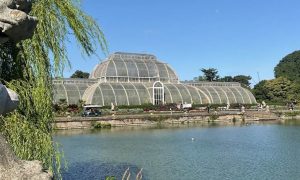
Image Caption: Photograph of the Palm House at the Kew Gardens (Source: Excy Hansda)
The Palm House at Kew Gardens is one of the most recognisable glasshouses in the world. Beyond its striking iron-and-glass structure lies a layered history shaped by royal ambition, scientific experimentation, and Britain’s colonial past. Yet, despite its significance, the archival records that tell this story are scattered across institutions, often difficult to trace, and lacking a single, clear guide.
This project set out to change that.
The Challenge
Researching the history of Kew Gardens and the Palm House in particular can feel like piecing together a puzzle with parts spread across multiple archives. Letters, reports, maps, photographs, and drawings exist, but without a central finding aid, accessing and interpreting these materials is time-consuming and often inaccessible to non-specialists.
During my placement, I focused on addressing this gap by identifying, reviewing, and organising archival material related specifically to the Royal Palm House. The goal was simple but important: to make these sources easier to find and use, not only for researchers, but also for Kew staff and the wider public. By doing so, the project aimed to support future research, exhibitions, conservation work, and more inclusive storytelling around Kew’s landscape, architecture, and colonial connections.
Research Team
- Excy Hansda (University of Liverpool, NWCDTP)
- Kiri Ross-Jones and Mark Nesbitt (Royal Botanic Gardens, Kew)
What We Did
Over the course of a two-month, part-time work stint, I followed a structured, phased research approach:
- Reviewed key secondary literature on Kew Gardens, including books, the UNESCO World Heritage Site nomination dossier, and other foundational texts.
- Visited the Palm House and discussed its ongoing restoration with David Francis, gaining valuable insight into its architectural and conservation challenges.
- Surveyed additional archives, including the Westminster City Archives and The National Archives, to identify relevant documents and visual material.
- Compiled a comprehensive finding aid, bringing together references to memos, correspondence, reports, maps, photographs, sketches, and newspapers into a single, accessible Word document.
Results and Impact
The outcome of this work is a detailed finding aid covering both archival and visual sources related to the Royal Palm House. Designed primarily for Kew staff, it also serves future researchers, students, and visitors interested in the history of the site.
In the long term, the finding aid will support:
- exhibition development and public interpretation,
- educational programmes,
- scholarly research on topics such as architectural conservation, colonial botany, and visitor experience,
- and practical conservation efforts, including the ongoing Glasshouse restoration projects at Kew.
The finding aid can be accessed by contacting staff at the Royal Botanic Gardens, Kew Archives. Selected images from the project, including sketches and archival material, are also shared on X, here- https://x.com/excy_hansda/status/1980666905410281511?s=20.
Personal Reflection
This placement was an invaluable opportunity to deepen my archival and object-based research skills while gaining hands-on experience in the GLAM sector (Galleries, Libraries, Archives, and Museums). Working across multiple archives in London and collaborating closely with Kew staff strengthened my communication, collaboration, and public engagement skills, all essential for careers in academia and heritage.
Most importantly, the project reaffirmed the value of archival work not just as a scholarly exercise, but as a way of opening up histories, making them more accessible, and helping institutions tell richer, more inclusive stories about their past.
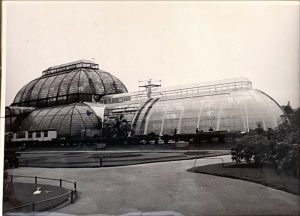
Image 1: Photograph of the Reconstruction of the Palm House, 1955 (Source: National Archives)
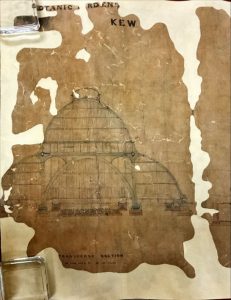
Image 2: Proposed design for traverse section of the Palm House, 1855 (Source: National Archives)
This project was funded by the North West Consortium Doctoral Training Partnership, part of the Arts and Humanities Research Council.
0 Comments