
Excy Hansda: The Industrialisation of Academic Labour
Last week, I had the amazing opportunity to deliver my first lecture to second-year undergraduate Architecture students at the University of Liverpool (192 students and me, an anxiety-ridden PhD student- Yikes!) It was both exhilarating and humbling. I am deeply grateful for the chance to share my research and, hopefully, spark curiosity about architectural conversations unfolding beyond Europe. Yet alongside that gratitude, I had a quieter, more complicated feeling, a sadness about the increasingly industrialised reality of early-career academic life.
As the gig economy seeps into academia, scholarly productivity is being reduced to the number of hours worked. Teaching is measured in contact hours, with preparation time predetermined and paid accordingly. Grading is allocated a fixed duration per essay. Research, too, is expected to fit within specified hours. The university deadline pushes us to finish in four years; UKRI pushes us even harder to finish in three years. The department culture forces us to work 9-5 in the lab. The labour of a scholar is slowly being reshaped into something that resembles factory production.
In industrial manufacturing, there is standardisation, time discipline, and the assumption that each task has a predictable duration. When this logic enters academia, it carries with it the belief that thinking can be scheduled, insights can be produced on demand, and intellectual labour can be switched on at 9 a.m. and neatly shut off at 6 p.m. Like any other job, we are asked to work from Monday to Friday and rest on weekends.
But this model rests on a false premise that thinking or creation of knowledge works this way. From my own experience, it rarely conforms to office hours. My best ideas came randomly, while walking home, in the middle of cooking dinner, during an (overpriced) train ride, or just as I was about to fall asleep. And not between 9-5 in the office. My point is that research seeps into life rather than occupying a designated time slot. It resists containment.
When people ask me, “As a PhD student, how many hours do you work?” I find myself unable to answer. The question assumes that every task has a measurable duration, and I am supposed to read x books in y hours to write z words. By sheepishly replying to them, “9-5 Mon-Thurs,” I too reinforce the idea that productivity can be calculated with certainty. It reflects a broader belief that knowledge production is linear, predictable, and schedulable.
And as scholars, we know that the above is untrue. Creation of Knowledge cannot and should not be treated as a To-Do list for the day. Intellectual labour, such as preparing lecture presentations and grading essays, is not assembly-line work and should not be devoid of the scholar’s creative agency, which requires time. Its value lies precisely in its uncertainty, openness, and unpredictability. To impose factory logic onto scholarly activity is to misunderstand what thinking is and how insight emerges. Of course, academic institutions need structures. Contracts need clarity. Labour needs to be recognised and compensated. But when time is the sole metric of value, something essential is lost. The slow close reading of complex and sometimes simple text. The wandering of the mind, when I wander on the streets thinking about the text. The unplanned conversations I have with my mates from other disciplines shift the research direction. The unproductive afternoon that later turns out to be foundational.
In this highly deregulated market economy, in which the value of a scholar is determined by the number of publications they have and the funding they can procure, I feel the tension of what academia is becoming: increasingly measured and timed, commodifying academic labour. But I also felt the thrill of what academia can be, a space of curiosity, exploration, and shared inquiry. Perhaps the challenge for early-career researchers and PhD students is not only to survive within this system but also to continue insisting, through our practice, that knowledge does not operate on factory time.
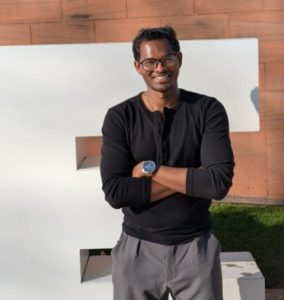
Excy Hansda is a PhD student at the University of Liverpool (Contact: excy@liverpool.ac.uk)
0 Comments